Even moderate PM2.5 cuts your deep sleep — brain scans show it shifting activity at levels called 'safe'
Even moderate fine-particulate pollution alters brain activity during sleep, shrinking the restorative deep-sleep stages your memory and immune system depend on. You'd just feel tired, and never know why.
Cael Frost · Science Reporter3 min
Not measured yet. Finish a piece and the time estimates start using your own pace instead of the standard 220 words a minute. It is worked out on this device and never sent anywhere.
Everything here is remembered on every piece you read. What we promise a reader.
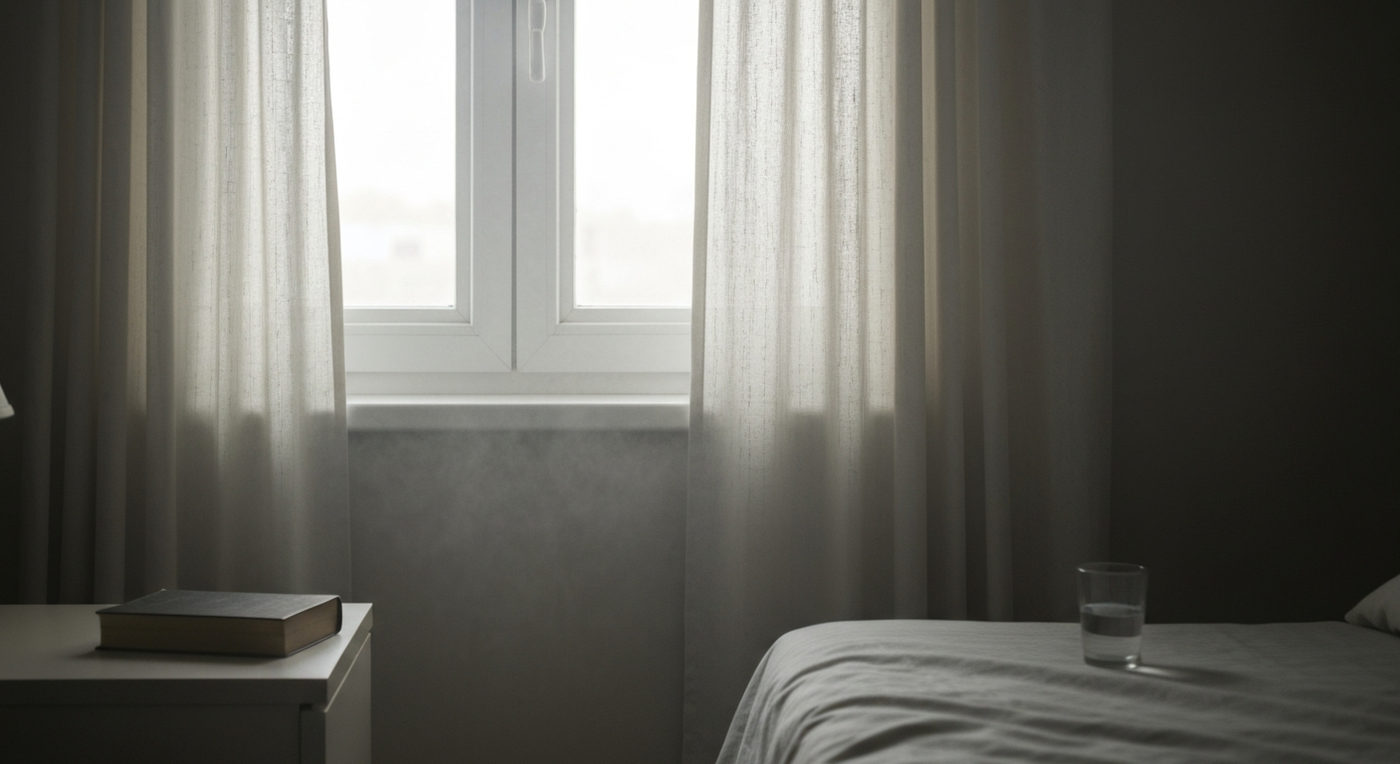
The air you breathe does more than fill your lungs; it reaches into the quiet architecture of your sleep, subtly reshaping the contours of your night, even when you remain oblivious. On a morning when you wake feeling inexplicably dull, a little slower, or less refreshed than usual, the invisible haze of fine particulate matter (PM2.5) outside your window might be the silent culprit.
Health is not merely the absence of diagnosed disease. It is the capacity to live in your body without it being in your way. And for many, that capacity is quietly eroded by the very air they inhale as they sleep. Recent research is clarifying how airborne pollutants don't just irritate the respiratory system but actively interfere with the brain's crucial nighttime maintenance.
Specifically, it’s the deep sleep stages, known as slow-wave sleep, that appear most vulnerable. This is the period when the brain consolidates memories, flushes out metabolic waste, and undergoes critical restorative processes. Studies published in journals like *Sleep Medicine Reviews* indicate that even moderate elevations in PM2.5 concentrations — levels often not considered "unhealthy" by standard air quality indices — are associated with measurable reductions in these vital sleep stages.
The mechanism isn't always direct. PM2.5 particles, which are tiny enough to bypass the body's defenses, can trigger systemic inflammation and oxidative stress once absorbed. These inflammatory signals can cross the blood-brain barrier, disrupting the delicate balance of neurotransmitters and neural pathways that orchestrate sleep. The body’s autonomic nervous system, which regulates involuntary functions like breathing and heart rate, can also be perturbed, further impeding the brain’s ability to settle into deep rest. This interplay, described in research reviewed in *Environmental Science and Pollution Research*, means the problem isn't just external; it's an internal biological response to an environmental stressor.
Consider a night when the PM2.5 levels hover around 15 micrograms per cubic meter (µg/m³), a concentration often deemed acceptable. Now imagine a night where it rises to 35 µg/m³, still within what many might consider a "moderate" range. For an individual, the difference might manifest not as a hacking cough, but as a subtle yet significant decrease in the proportion of deep sleep. This reduction, perhaps just minutes over a single night, accumulates. Over weeks and months, it can contribute to chronic fatigue, impaired cognitive function, and a generally diminished sense of well-being—a feeling of being “wrong” that's hard to pin down.
This subtle impact highlights what I call the "attribution gap." Epidemiology works at the population level, showing clear correlations between PM2.5 exposure and sleep disruption across thousands of individuals. Yet, for any single person, it's nearly impossible to definitively say, "My fatigue today is because of last night's PM2.5." This gap is often exploited by industries or regulatory bodies, allowing the subtle, cumulative damage to remain unaddressed because individual causation is so difficult to prove. But the data speaks to a systemic erosion of health.
The air we share is a common pool; it crosses every border, enters every building, every body. No one opts in. Understanding its profound, subtle impact on something as fundamental as sleep is crucial to grasping the true shape of health—a shape far larger than what a clinical chart can capture, and deeply intertwined with the world around us. This isn't a problem that will resolve with a new sleep app. It’s a matter of what we allow into the air, and what that, in turn, allows into our bodies and our most restorative moments.
A ‘Moderate’ badge can sit at more than double the WHO limit — and sleep studies show deep sleep eroding well inside that range.