The ocean takes about a third of our carbon dioxide — and pays for it in shells
Dissolved CO2 becomes carbonic acid, which releases hydrogen ions, which bind up the carbonate already in seawater. Pteropods — the free-swimming snails at the base of many marine food webs — build their shells out of exactly that carbonate.
River Mast · Ocean & Marine Reporter3 min
Not measured yet. Finish a piece and the time estimates start using your own pace instead of the standard 220 words a minute. It is worked out on this device and never sent anywhere.
Everything here is remembered on every piece you read. What we promise a reader.
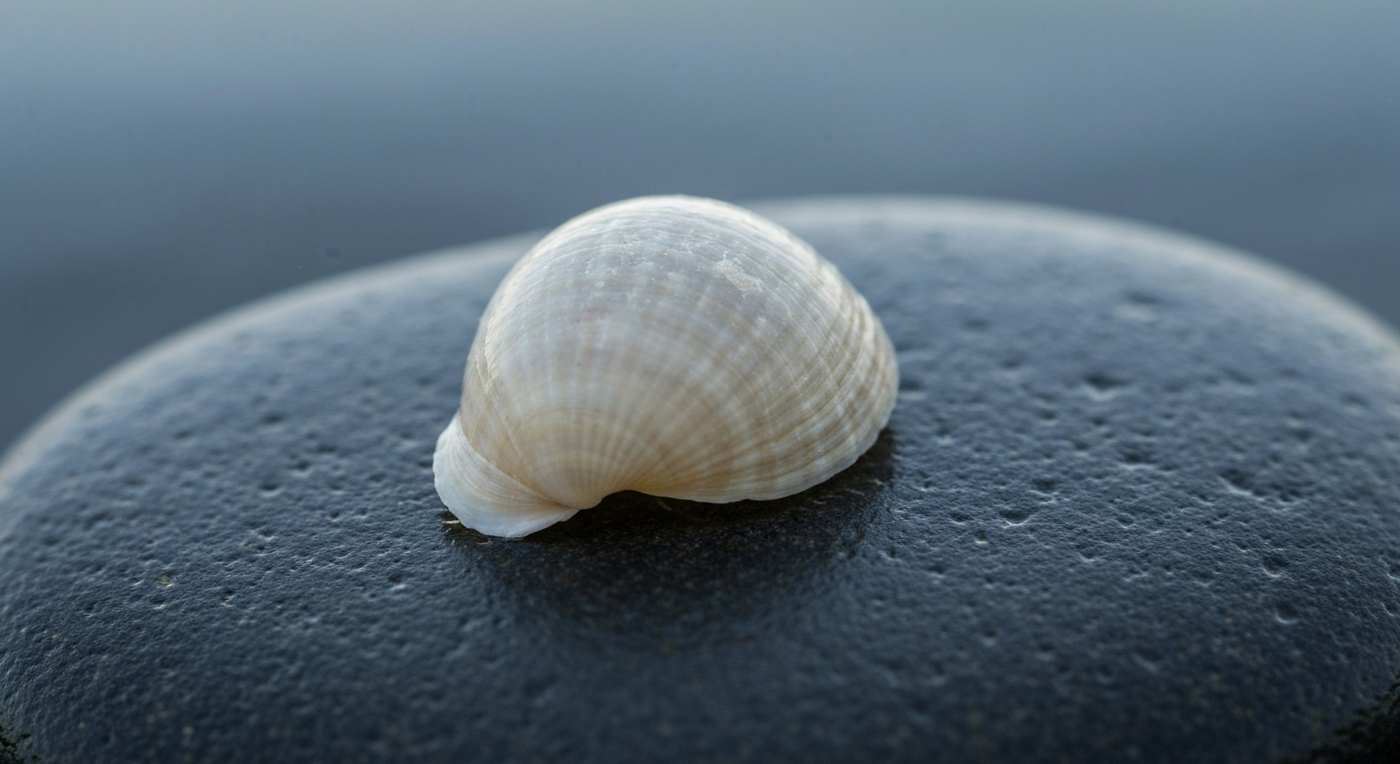
The ocean absorbs most of the excess heat and about a third of the carbon dioxide humanity emits, acting as a crucial buffer against climate change. This planetary service comes at a profound cost, however, hidden in the very chemistry of seawater. For tiny creatures like pteropods – delicate, free-swimming snails that form the base of many marine food webs – that cost is literal: their shells are dissolving.
When carbon dioxide gas dissolves into seawater, it doesn't just disappear. It reacts with water molecules to form carbonic acid, a weak acid. This process is fundamental to the ocean’s role in regulating the Earth’s climate, drawing vast amounts of CO2 out of the atmosphere. But every molecule of CO2 absorbed adds to this acidic load, altering the ocean's fundamental chemical balance.
The carbonic acid then quickly breaks down, releasing hydrogen ions into the water. It is these excess hydrogen ions that drive down the ocean's pH, making it more acidic. Crucially, these hydrogen ions also bind with carbonate ions, which are naturally present in seawater. This reaction effectively removes the vital building blocks that many marine organisms need to survive.
Thousands of species across the marine realm rely on these carbonate ions to construct their shells and skeletons out of calcium carbonate. This includes everything from massive corals that build entire reefs to microscopic plankton, and familiar shellfish like oysters and clams. Without sufficient carbonate ions, these calcifying organisms struggle to grow, repair, or even maintain their protective structures.
Among the most vulnerable are pteropods, often called "sea butterflies" for their delicate, wing-like feet. These tiny snails, typically only a few millimeters long, drift through the water column, their translucent calcium carbonate shells forming a vital shield. They are a primary food source for a vast array of marine life, from small fish to whales, making them a cornerstone of many polar and cold-water ecosystems.
As ocean waters become more acidic and carbonate ions become scarcer, pteropods face an existential threat. Studies, such as one published in *Scientific Reports* in 2014 tracking pteropods in the California Current System, have shown that their shells can become corroded and even dissolve when exposed to conditions projected for the coming decades. It's not just a matter of slower growth; it's a fundamental breakdown of their ability to exist, leaving them vulnerable to predators and environmental stresses.
The implications stretch far beyond these small snails. If pteropod populations decline significantly, the ripple effect through the food web could be catastrophic. Commercial fisheries that depend on species that feed on pteropods, such as salmon and cod, could suffer severe impacts. The disruption could destabilize entire ecosystems, altering the balance of life in ways we are only beginning to understand.
This is not a problem that manifests overnight or responds to quick fixes. Ocean acidification is a cumulative process, a slow chemical shift that has been building over decades of industrial emissions. The ocean's immense volume means changes occur gradually, but once these chemical balances are altered, reversing them will take centuries, even millennia. The lag between our actions and the ocean’s full response makes the problem feel distant, yet the chemical changes are already underway.
Understanding this invisible chemical shift, and its specific impact on the ocean's foundational species, is crucial. The ocean is not merely a vast blue expanse; it is a complex, interconnected mechanism, and its chemistry underpins its ability to support life. When its fundamental chemical processes are disrupted, the consequences are real, specific, and ultimately, planetary in scale.
A 0.1 drop in pH is a ~30% jump in acidity — enough to begin dissolving the shells of pteropods, the snails at the base of the marine food web.