They paved the Willow Creek wetlands for a warehouse — the flood protection it gave for free was never on the books
The developer's balance sheet carried the price of the land and none of the flood mitigation or water purification the marsh was already doing. Those services never had a market price, so they never entered the cost-benefit analysis that approved the build.
Ada Voss · Public Health Reporter3 min
Not measured yet. Finish a piece and the time estimates start using your own pace instead of the standard 220 words a minute. It is worked out on this device and never sent anywhere.
Everything here is remembered on every piece you read. What we promise a reader.
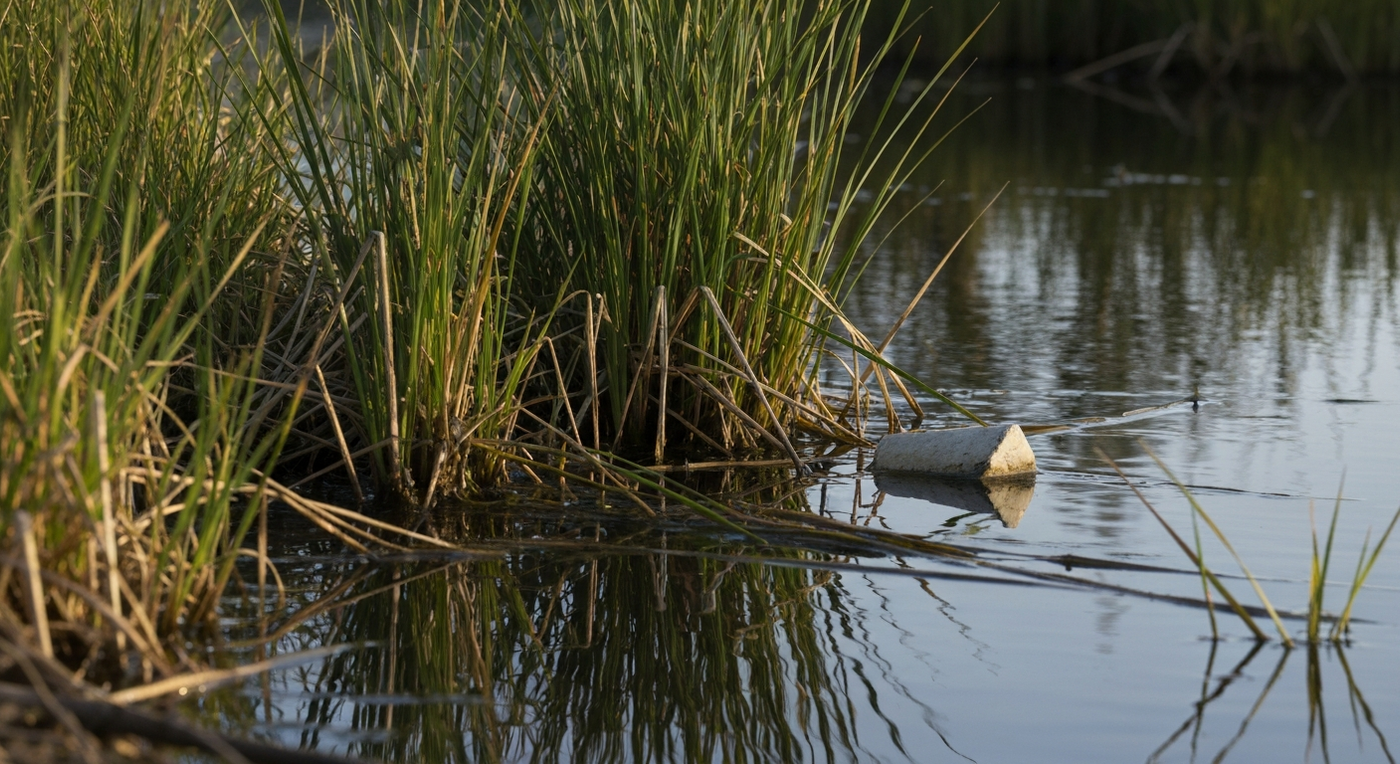
The clatter of an excavator’s bucket tearing through peat and sedge marked the end of the Willow Creek Wetlands last autumn. What was once a vibrant, spongelike basin, a stopover for migratory birds and a natural filter for the groundwater of Portsmouth County, is now a leveled expanse awaiting concrete. This particular patch of marshland, like countless others across the globe, fell victim to an economic calculus that effectively rendered its ecological services worthless, leading to a specific, measurable decline in the surrounding environment.
For centuries, the Willow Creek Wetlands performed critical functions for the region. Its dense network of sedges and cattails served as a natural filtration system, removing nitrates and phosphates from runoff before they entered the Willow River and the aquifer that supplied local wells. The marsh acted as a vast sponge, absorbing millions of gallons of storm water, mitigating flood risks for homes and businesses downstream. It was also a crucial breeding ground for the spotted salamander, a regional indicator species for wetland health, and a vital migratory stopover for numerous waterfowl, providing a complex, stable food web that supported local insect and fish populations.
The decision to drain and fill the wetlands came after the Portsmouth County Planning Commission approved the "Evergreen Logistics Hub," a sprawling distribution center promised to bring hundreds of jobs and a significant boost to the county’s tax revenue. The developer’s bid highlighted immediate economic gains: construction jobs, permanent logistics positions, and increased property tax income. These were tangible, captured values that easily factored into the county's financial models. The diffuse value of the wetlands—cleaner water, flood protection, biodiversity—remained largely unquantified, and therefore, unrepresented in the final decision.
This disparity in valuation is not an oversight unique to Portsmouth County; it is a systemic flaw in how many economies operate. A 2025 study in the Journal of Environmental Economics and Management, which quantified flood mitigation and water purification services of regional wetlands, found that the annual economic benefit of a healthy freshwater marsh could easily exceed millions of dollars in avoided infrastructure costs and public health improvements. Yet, these savings are rarely assigned a market price or included in the cost-benefit analysis of development projects. The developer does not pay for the water purification the wetland provides, nor do they compensate for the increased flood risk that will inevitably fall to the public.
The consequences for Portsmouth County are now emerging. Residents in communities downstream from the former wetlands have reported increased frequency and severity of localized flooding during winter rains, with basements previously dry now regularly pooling water. Local water utilities are facing higher treatment costs as nitrate levels in wells have begun to rise, necessitating new filtration investments. The local population of spotted salamanders has plummeted, and the chorus of migrating birds that once filled the spring air is noticeably diminished, severing a key ecological relationship within the regional food web.
These impacts are not abstract; they are the specific costs of an economic model that prioritizes immediate, captured financial gains over long-term, diffuse ecological services. The story of Willow Creek is a precise example of how biodiversity loss is not just about a species disappearing; it's about the erosion of functional systems that underpin human health and economic stability.
To prevent similar losses, a fundamental shift in economic valuation is required. Regulatory frameworks must evolve to integrate the measurable, long-term value of ecosystem services into development assessments. This means proactively accounting for the costs of losing natural capital, rather than reactively addressing the consequences after the damage is done. Only then can decisions reflect the true, comprehensive cost of transforming natural landscapes into concrete and steel.
The Willow Creek wetland provided flood protection and water filtering at no charge — services that never entered the ledger, so the community now pays for their loss.